Tuesday, May 17, 2016

Council of Wyrms Conversion and Setting Document

So uh, this got linked in a few places. Um. Hi? Quite the unexpected traffic spike, but I'm glad people are interested!

After a few caffeine-fueled late nights and lots of wear and tear on my keyboard, I've produced an updated version of my Council of Wyrms conversion. This contains all of the latest changes to the systems, as well as the full homebrewed version of the setting based on what I've been rambling about the last few entries.

Approximate change list of systemic stuff (patch notes, if you will):

  • Amethyst dragons now deal force damage with their breath weapon, and are resistant to it.
  • Added section on designing encounters, mostly from a guidelines perspective.
  • Added half-dragon character options.
  • Added campaign option discussions.
  • Added Io's Blood Isles Bestiary with five sample creatures a DM might want to use; at least one of these is specific to the aforementioned homebrew version of the setting.
  • Added dragon equipment.

Without further ado, here you go.

Go forth and conquer!

Sunday, May 15, 2016

The Culture of the Council of Wyrms

Today I wanted to talk a bit more about my version of the setting, and how the dragons' culture is wonderfully rich and diverse beyond the simple structure of lord and vassal. After that, I wanted to expound a bit more on what I imagine the homeland of the dragon slayers to be like.

Dragon Culture


Dragons neither want nor need many of the luxuries common in the development of other civilizations. As a simplified example, most breeds do not feel significant discomfort from inclement or extreme weather and find most indoor environments claustrophobic, and so have never needed to devote their considerable mental faculties to the development of advanced architecture.

Naturally, they support (perhaps a bit condescendingly) the needs of their vassal servants to do the same, but when the dragons control the funding and approval of such endeavors, technological advancement is understandably slow. In the thousands of years the Council and dragonkind has been in control of the isles, its vassal races have seen little development beyond the confines of their late medieval and early Renaissance level societies.

There is great development within those confines, however, and one should never underestimate the power that magic provides in replacing some of the creature comforts that more advanced societies enjoy. Furthermore, the spread of learning institutions, funded and governed by the dragons, is supported by all but the most tyrannical wyrms. Vassal races and their dragon masters are generally better educated and enjoy a greater standard of living than those who exist outside of Council society.

Dragons of Council society, regardless of their nation and clan, are distinct from their counterparts in other worlds of the multiverse. The dragon language has a well-developed written form, and Council dragons do not shy away from composing elaborate scriptures and treatises for distribution in libraries; these are, of course, copied down in smaller versions for consumption by vassals, who may find it quite troublesome to lift a seven hundred pound book bigger than themselves. Many dragons enjoy reading, and literature is traded amongst clans as vassals might trade in gold or grain.

Perhaps affected by their time among their vassals, some dragons even enjoy wearing simple garments or jewelry. A sash across the throat, a gem-encrusted gold chain, a claw glittering with rings, or even wing piercings are not unheard of for a dragon to wear. This separates them, they claim, from clanless “rogue” dragons who are more rough around the edges and cannot manage such luxuries.

The many centuries that dragons endure risk the onset of terrible ennui, and so some wyrms stave off their boredom with games, hunting, and other activities to sate their needs. Clan Jadress, for example, brings in much of its wealth by playing host to various gaming dens and the preparation of elaborate cuisines to fulfill any dragon’s appetites.

Of course, few dragons will admit they can fall prey to such mortal afflictions as boredom. Dragons are nothing if not proud and so sure of themselves as the pinnacle of creation, so ordained by the Ninefold Dragon. A vassal that speaks out of turn about their benefactors can expect to be devoured in a red dragon clan, and at the very least be visited with scorn and condescension by a silver or gold clan. How could a dragon be anything other than right?

On the subject of vassals, each clan and breed treats theirs differently. The culture of vassal sometimes affects dragon, and vice versa, so across the generations they often grow to reflect one another. The elves, dwarves, and gnomes that populate most of the isles alongside their masters have long recognized their place in the society, which even in the best of circumstances is that of second class citizens.

Naturally, metallic and gem clans tend to treat their vassals better, but this is not always the case. Stories of gold wyrms who exile dissenters, even well-meaning ones, for the simple crime of flouting the dragons’ decrees for the greater good are not unknown. Conversely, even brutal red and white clans realize the value of their vassals, even if they are eminently expendable. Clan Vermillion, for example, has a surprising system of meritocracy where even a powerful vassal champion can achieve great status in the clan -- provided they can continue to maintain it against the constant stream of challengers.

Regardless of clan or breed, vassals perform many of the tasks dragons cannot (or will not) perform. The claws of dragons, despite their relative dexterity, cannot weave nets or form pottery, or quarry stone. Emerald dragon philosophers correctly surmise that Council society, and even individual clans, simply cannot survive as they are now without the support, labor, and love (or fear) of their vassal servants.

The Human Menace


In ages past, the dragon slayers came and wreaked havoc across the isles until the dragons banded together to fight them. Though they were defeated after decades of warfare, the scars the humans have left on dragonkind are psychologically profound. Humans are the one thing that dragons truly fear, and that is never easy to admit.

Human tribes, long degenerated from their heyday as the dragon slayers of old, still dwell on the isles. These remnants of the abandoned or vanquished dragon slayer armies have no knowledge of their ancient and glorious past, and rarely rise above the status of nomads or savages. Occasionally, a charismatic human warlord will rise and raid vassal villages, and it is then that the dragons act to cull the herd.

Despite this, humans have proven remarkably resilient and difficult to excise from the isles completely. Somewhere over the eastern horizon, the rest of their race lives still. The dragons quietly offer prayers that they do not return.

The land of the humans, should it ever be visited, is a monster-infested wilderness dotted with crumbling kingdoms and decadent city-states. Human civilization never truly recovered after the grand crusade of the dragon slayers, even thousands of years later -- tyrants and petty nations rise and fall, with society never advancing beyond a perpetual dark age.

The ancient grandmasters of the dragon slayers live on, however, as monstrous undead lords in crumbling Gothic citadels on the fringes of known lands -- cursed by Great Io for performing the very duty he charged them with in days of yore, hated and feared by the rest of humanity for leading their kind to disaster in a failed crusade. Recruits are few and far between, usually criminals or other outcasts that find shelter from justice or the depredations of monsters in the dragon slayer citadels. The choice the grandmasters and their servants give them is simple: join the slayers, or join the dead.

Their land has its own dragons, of a sort -- degenerate drakes, sinuous linnorms, and inbred hybrids exiled from the Io’s Blood Isles centuries or millennia before. The dragon slayers continue to hunt and slay these creatures, a mere shadow of what they once were, but begrudgingly allowed to exist for this service they provide to the rest of their kind.

The dragon slayer grandmasters have not forgotten the Io’s Blood Isles or the dragons who dwell upon them. Even thousands of years later, they boil with hatred of the dragons and their manipulative creator, the Ninefold Dragon, who deceived them into being his tools and then abandoned them to suffering and undeath.

Sunday, May 8, 2016

That Which Dragons Fear: Dragon Slayers of the Council of Wyrms

While I am working on more dragon nation write-ups, I wanted to talk a bit more about an amusing idiosyncrasy in the Council of Wyrms setting.

Dragons fear humans. In this setting, it's not in the same way that a human fears a vermin infestation; humans are fecund, for certain, but dragons have much more to fear from what humans are capable of rather than just their sheer numbers. They would never admit it, of course, except in the most trusted of company.

As previously mentioned, the Council of Wyrms was ultimately spurred to creation by the danger posed to dragonkind by human dragon slayers -- champions originally inspired by Great Io to sail across the sea and give the dragons a true threat that they must unify against. Now, there's a lot about this old legend that causes one to scratch their head, first and foremost why creatures and proud and stubborn as dragons would give homage to a deity that repeatedly engineered their destruction until they were brought to heel. I may delve into that conundrum at a later date.

The dragon slayers came from a nameless, obscure land across the eastern sea, one the dragons either ignored or did not deign to learn about during the war. All that is known (though perhaps, only by the most cloistered acolytes of Great Io) is that the humans were visited by the Ninefold Dragon and told of the wicked monsters that lived across the seas. Great Io taught the humans magic, metallurgy, and the means to make war on such titanic creatures.

For what reason did the humans follow his wishes? Well, at the time of the visitation, the humans were naught but scattered tribes, and the appearance of such magnificent divinity in their midst assuredly inspired a culture that both worshiped and feared dragons. Perhaps Great Io told them that one day his wayward children would visit calamity upon the humans unless culled or vanquished first. Fantasy religions have been founded upon stranger things.

What we don't know is what the culture of the humans of this setting is like except for the broadest strokes, or why every once in a great while (we're talking on the scale of centuries or more) one or more dragon slayers return to the Io's Blood Isles. Now, the reason this isn't covered in the boxed set is pretty obvious; this is a game about dragons as player characters, centered around the Io's Blood Isles, not humanity and its cultural dichotomy of both hating dragons while worshiping their chief god (or at least, such seems to be implied).

The Council of Wyrms books talk about the dragon slayers once visiting the Isles with flashing steel and terrible magic that rivaled that of the dragons themselves. Some interminable number of human lifetimes later, at least a couple return to play a part in one of the boxed set example adventures (it's been 22 years, statute of limitations is up on spoilers there, I think).

We can assume that this society of humans has mastered high magic, shipbuilding, and the forging of tough steel armor and large weapons capable of penetrating dragon scale. There is even a precious single image in the book as to what one might look like -- a woman with fabulously 80s hair clad in full body armor, mercifully (and possibly unique in this era) free of boob-plate, with a helmet shaped like a dragon skull and a sword on her back that is absolutely styled after a historical zweihander.

The adventure also tells us, in a couple paragraphs, that the dragon slayers were scattered after their defeat at the hands of the united dragon clans. Some of the human tribes remained behind on the Io's Blood Isles, living in hiding or at the mercy of benevolent clans (but never as part of their society). Some returned home, scorned by their own people for such a disastrous conflict -- and as the centuries passed, they lost much of the knowledge gifted to them by Great Io, particularly how to build their mighty ships to cross the seas.

Many fantasy roleplaying game cultures adopt the idea of eternal medieval stasis in order to maintain the status quo and retain mass market appeal; that is, technology rarely evolves beyond Gothic architecture, sturdy full plate armor, steel weapon construction, and Renaissance-era medicinal and artistic advancement. The vassal races and humans of the Council of Wyrms setting are no different. There are, of course, notable exceptions whose unique flavor sets them apart. A culture that fully integrates magic into its academic and technological achievements nets you Eberron, for example (which I adore, but that threatens a huge digression).

The dragon slayers that remain are outcasts, and we know very little about what else exists over there. Dragon slayer cabals continue to exist and train future generations, but if they enjoy a status little better than unwelcome neighbors in human societies, then they surely lack the numbers and support to mount further invasions. Their culture and advancement seem stuck in the same state they were at the time of the last war -- it's easy to imagine the tribes, so quickly uplifted by divine intervention, that they settled into perpetual and unending conflict in the generations that followed.

While we don't know what these lands are like now, I prefer to imagine them as crumbling kingdoms ruled by impotent dynasties, feuding over precious resources and the loyalty of a populace that never quite recovered. Warlords and monsters sweep in with generational frequency, visiting calamity upon the humans. Perhaps the dragon slayers -- conquerors of titanic beasts they are -- gain periodic influence by restoring order and vanquishing mighty terrors, only to be driven back into their crumbling citadels after the threat passes.

And when they discover a way back to the shores of the Isles? The dragon slayers would likely jump at the chance to finally complete their mission, thousands of years after they failed.

Click to embiggen.

Tuesday, May 3, 2016

Dragon Nations, Conversion Updates, and Setting Discussion!

Before I started off this one, I wanted to re-link my conversion, which has received updates since version 1.0. A couple things changed since the original posting, specifically the following:

  • Harbinger edited it for me, because I have a serious problem with passive voice. The perils of writing spoken dialogue for much of my day job's writing needs. He probably still wants to kill me after a decade of never quite shaking the habit.
  • Sapphire dragon breath is now a combo of psychic and thunder damage; it was too samey to make amethyst, emerald, and sapphire dragons all do the same damage type, and I'm not comfortable using raw force damage for the amethyst dragon's lozenge-bomb. I might change my mind though.
  • Sly Talon fighting style got buffed up.
  • Dragon rogues treat all of their natural attacks as finesse weapons, so they can naturally make use of their primary Dexterity score. Since, you know, they can't take Sly Talon unless they multiclass, and I don't want to force that on them.
  • A couple natures received some upgrades. I'm still not completely satisfied with them all yet, so more changes may happen.
  • Dive was slightly reworked so you don't need to crater every time you use it if you're flying low.
Since that's out of the way, I can dive into some more customized setting conceits.

Get Your Alignment Checked


First off is the idea that alignment does not figure in as strongly; red dragons won't always be chaotic evil (though most are), silver dragons won't always be lawful good (though most are), and allies may be a bit fuzzy. Clans are less bound to the family of dragon to which they belong (that is, chromatic, gem, or metallic) and more to their clan-kin and the other clans of their nation.

Unlike some of my cohorts, I don't hate alignment as a tool in general (I like it being a rough guideline of a creature's expected societal behavior and quick-reference moral compass), but I do detest it being used as a cudgel to muscle players into behaving a certain way. Council of Wyrms was originally designed with the alignment system being very rigid, which is very much a product of its design era. Gold dragons must be lawful good, red dragons were always chaotic evil and thus unsuitable for player characters.

Well, I don't like that for a number of reasons, but mostly because sapient creatures don't work that way. While it's a fantastical setting where gods sometimes literally mold their followers in a particular image, that creates kind of a boring status quo. I like the idea of neutral evil bronze dragons, or lawful neutral red dragons playing politics on the Council without constantly trying to destroy it. I mean, how annoying would it be to constantly have to invite a guy to a party when you know he's going to try to knife you in the kitchen when no one's looking?

Anyway, this approach might not appeal to everyone, but alignment will be fluid without sacrificing what the dragons are deep down. Reds are still conquerors and tyrants, but they can work with the Council and the other clans even if the relationship is tenuous at best.

Draconian Politics


I've organized the dragon territories into discreet "nations" which all owe allegiance to the Council of Wyrms. The Council ostensibly has authority to influence the clans of these nations with edicts and proclamations, but each nation has its own form of governance and its own discreet laws which coexist with Council mandates. This isn't a sleek, uneventful arrangement; the Council chafes against the very existence of these nations, but knows that it cannot effectively govern dragonkind on anything but the macro level without them.

Some of the ideas I use are certainly more modern, and the dragons in my vision of the setting are more... civilized? That's not really the right word, but the clans are more like familial groups rather than political bodies. Each still has a representative on the Council, but this representative may (as in the case of the Fireshore Republic) have to pull double-duty in their own territory.

There's probably a lot wrong with my approach and I'm still ironing out some of the details. For consumption, I'd like to share one of my write-ups of the dragon nations, the Burning Isles. This nation is a collection of islands in the southern seas of the campaign setting; Bloodtide, Lightning, Eversand, Storm, and the Forbidden Isle.

The Burning Isles: An Example Nation


As the group of islands with the largest concentration of dragonkind, the Burning Isles are a constant hotbed of intrigue, proxy wars, and conspiracies that range from the mundane to the staggeringly complicated (in ways that only dragons can make things). Dragons of polar opposite breeds find themselves forced to work and conspire together against the other feudal domains of dragon lords with greater influence on the Council.

The undisputed master of the Burning Isles is the ancient and terrible Firebrand the Red of Clan Bloodtide. A domineering schemer, he holds most of the other clans in the Burning Isles under some manner of threat, blackmail, or largesse. Like most of his breed, Firebrand desires power above all else, but goes about it in a different manner than other, less-careful red dragons.

Instead of immolating cities and dominating lesser dragons through brute force, Firebrand has constructed a vast network of trade routes, treaties, and blackmail with the other clans of the Burning Isles. Exotic goods of all kinds flow in and out of the streets of the other cities in the region, from delectable jungle fruits desired by vassal races to highly addictive narcotics that even dragons crave.

Whenever a clan falls out of line of the red dragon lord’s plans, Firebrand merely lifts one claw holding down another clan that would just as soon battle its rival for better status in the region. The problem typically corrects itself in short order, as all of the clans are interested in maintaining the status quo, at least on the surface.

For all that everyone in the Burning Isles feuds with each other, they hate Firebrand more, but the dragon and his ilk are so powerful that it would take the concerted efforts of three or more clans to stand a chance against Clan Bloodtide’s fearsome power. In particular, the red clan maintains an order of powerful elementalist wizards, the Cabal of the Unquiet Earth, comprised of both dragons and favored kindred with impressive magical aptitude. A small army of elementals is at the Cabal’s command; primarily to hold back the fury of the active volcano upon which Malice, Clan Bloodtide’s capital, resides in all of its terrible majesty. It would be trivial to turn these elementals against would-be invaders, or unleash the full destructive power of the volcano on would-be invaders.

The other clans of this region function in a manner similar to the baronies and duchies of medieval societies; the dragon lord is the autocratic ruling body, who empowers a select few dragons as its dominates to mete out justice, supply it with tribute, and oversee the vassals that populate clan territory. Alliances with other clans are common, but often short-lived as Firebrand’s machinations do not allow them to remain allies for long before a scandal or small-scale raid (blamed on the other party, of course) drives them apart.

Unique within these domains is the black dragon clan of Darkmoon, a small and winnowing family of dragons numbering no more than seventy or eighty individuals and their few thousand oppressed vassals. The clan’s lord, Deathstream, is a wyrm recently accorded the status of ancient whose responsibility it is to bring the clan back to greatness.

Unfortunately, Firebrand knows that Deathstream is a weak and vacillating ruler, and so does his part to sabotage the ambitions of Clan Darkmoon. What Firebrand does not know (and indeed, very few of even Deathstreams court know) is that Deathstream has acquired a new, secret ally -- the red dracolich bearing the moniker “Infernus”.

This eldritch, undead warlock was slain at the claws of Baraster, the gold dragon founder of Clan Baraster, many thousands of years ago. The insidious dragon had a contingency plan, as well as a small cult of followers, which enabled him to rise again in lich form. Infernus is a powerful infernal pact warlock who has curried the favor of vile demon lords in exchange for his sorcerous might, and has designs of conquest over the isles.

First, he will use Darkmoon to broaden his power-base; already, a majority of the Darkmoon vassal populace has taken up worship of myriad minor gods that are, in fact, demonic generals. In time, Infernus hopes to open gateways to bring through a demonic army of conquest and march across the face of the world.

What I've Done Differently


In "canon" Council of Wyrms, Firebrand is indirectly billed as one of the biggest draconic dangers in the setting. He's got eyes on dominance and hates the Council and everything it stands for, but I like to think of him as a cunning manipulator rather than a rampaging force of nature. He dominates the isles through a combination of blackmail and a horrendously complicated web of influence. It's closer to lawful evil than chaotic evil, technically, but I've always found that to be the more interesting evil.

On the other hand, I've retooled Deathstream and Infernus, who have the same relationship in "canon" Council of Wyrms but with slightly different dark secrets in my version. Here, Infernus is a dracolich warlock, rather than a dracolich wizard, and has designs of conquest by using his demonic benefactors and their Abyssal legions.

As it pertains to the nation and its politics, I guess I made it a bit more grimdark. Which is kind of overdone these days, so I might scale it back a teensy bit -- the idea of drug-addicted dragons who have to go to Firebrand's contacts for their fix is possibly a little too modern of a concept for this setting.

Anyway, there's my example nation! I've got most of the others written up and ready for some polish, but I'll put them up in future entries. Happy gaming until then!

Wednesday, April 27, 2016

Direction Change: Back to the Isles

It's been a while since the last post. A crushing blow of work and life circumstances, along with a deep plunge in my creative energies, put the kibosh on my sandbox attempts. Until I can rekindle my drive on it, I think I'll table it for now and re-devote myself to a previous conversion that received significant traction elsewhere.

Harbinger poked me to do some more work on my Council of Wyrms stuff, since I hired him to do some actual editing work on it. Some complicated legalities prevent me from attempting to submit it for consumption on the DM's Guild, at least for any attempt at profit, but I may do so at a later date. I've been making updates to the conversion doc, and Harbinger's prodding has encouraged me to develop another component.

The setting provided to us previously only gave the lightest touch of the setting's particulars. A couple of introductory adventures, some flavor regarding the Council and its environs and antagonists, as well as a handful of clan descriptions were all that was provided. That's not a condemnation, I actually like when settings do that and don't bludgeon you over the skull with so much setting material that you don't have any room to make your own without performing generous reductive surgery.

To wit, I've been working on developing an interpretation of the setting for consumption. It takes some of the elements of the core Council of Wyrms setting and examines them through a new lens. It's a bit messy still, and I need to do some cleanup, but here's part of what I'm working with thus far.

The Council Aerie on All Clans Island is still the center of Council society and government, but even with the might of dragons it's difficult to truly contain and govern the whole of the species. It's a messy business, and though all dragon clans pay homage to the Council, they have fractured into a number of territorial nations comprised of multiple breeds sometimes forced to work together under chafing circumstances.

This is a lot of dragons to govern from one tiny island roughly the size of Maine.

The dragon nations each have composite forms of government, usually working together in matters of trade and defense, and all owing allegiance to the Council (who enforces its will through Io's divine mandate, a well-trained group of spies, and a substantial military). For example, the Icy Reaches are fairly remote in the island chain and are made to work together against regular raids by the frost giants from the northwest, who slay dragons for their hides and their treasure. White, crystal, and amethyst dragons will put aside their differences temporarily to work in tandem to repel these periodic invasions before returning to their isolation.

By contrast, the much more intertwined Exaurdon League, comprised of gold, green, and topaz dragon clans, have a well-connected nation of city-states and clan holdings. Gold dragons maintain universities and legal centers whose advocates are sought across the island chain to mediate disputes, while the greens manage a thriving lumber trade and the topaz clans deal in pearls from giant clams and control the fishing industry. All three breeds are threatened by violent fey creatures led by mysterious Wild Gods from the island's interior, who seek neither peace nor parley with the wyrms, only their eradication.

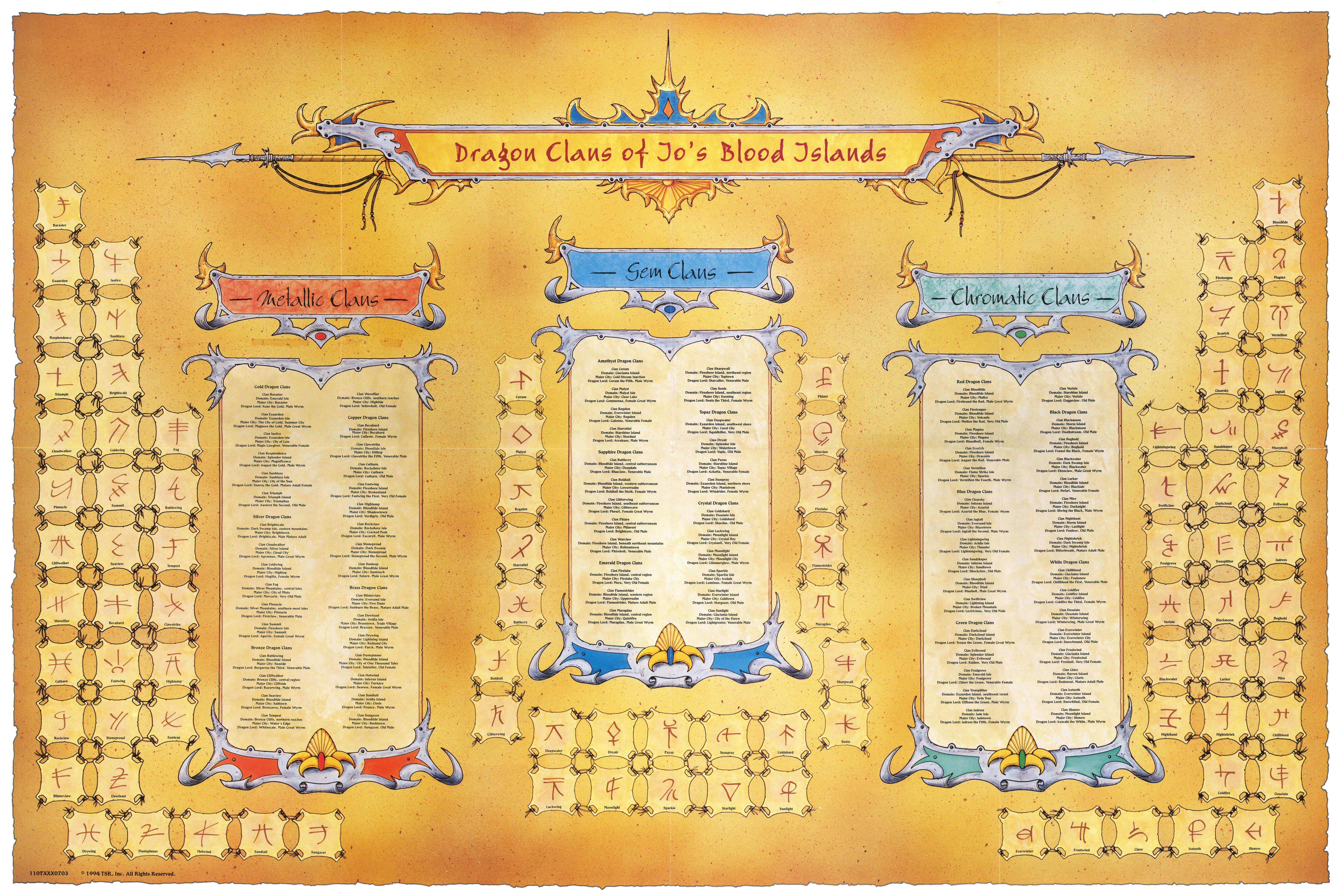
Other nations, such as the Starshine Principalities, the Azure Sea Compact, the Burning Isles, the Fireshore Republic, and the Giantbane Archipelago have their own unique cultures and melting pots of dragon clans that I am working on developing as well.

This project has helped rekindle my creative spark and I will be sticking with it for the foreseeable future. That's not the say the sandbox stuff has been abandoned, but until I feel inspired by it again, it will sit on its shelf for a bit. Apologies to any who were holding out for it.

Anyway, this setting concept has some kinks to work out and it's definitely a deviation from "canon" Council of Wyrms. It has a lot more modern sensibilities mixed in, and I'm eager to hear any feedback or suggestions regarding it.

Sunday, February 7, 2016

More Sandboxes! An Example Expedition

I'm back! Moving was more of a hassle than I expected, but I'm back and picking up where I left off. Today I'll present a sample of the area for a sandbox game, delve into the behind the scenes mechanics I am proposing, and then give an example of the adventure-level sandbox.

I chose a little section of Primeval Thule to use as my test bed for an adventure locale, between the southeastern Dhar Mesh region and the grasslands known as Kalayan the Golden. The city of Moklat serves as the home base of a hypothetical adventuring party. For this, and future entries, let's introduce a fairly-typical four person group:

  • Kreida, a glory-seeking Dhari human barbarian (Dhari Hunter narrative)
  • Mbalu, a prophesying Lomari human druid (Soothsayer narrative)
  • Nalhars, an exiled Thulean dwarf warlock (Star Lore Adept narrative)
  • Selorra, an amoral Thulean elf rogue (Free Blade narrative)

Last time I promised a sample adventure location map with supporting information, and here it is, courtesy of Hexographer. It's not as precise as an actual map of the area, but rather is designed to give players and the DM an idea of the most prevalent terrain and general qualities of a given hex rather than provide down-to-the-quarter-mile detail.

Keep in mind I have the graphic design and color coordination skills of a slug. It's a bit garish, but is the baseline for what I'm presenting. A small stretch of swamp lines the northern border, most of the west is jungle, and there are vast grasslands full of marauding barbarians and natural dangers. Finally, in the deep southeast, the tiniest edge of a mountain range and and a nearby glacier peek their heads out at the players.


So the map itself doesn't get super cluttered, I keep a separate spreadsheet with the cell number and its contents. There's a lot of adventure content packed into a seemingly small area. Every hex has a level (though the vast majority are level 1 or 2 at this nascent stage) and I've given ~25% of the 625 hexes something interesting in them, even if it's as simple as a landmark feature.

While the players would probably use the city of Moklat as their home base, an important facet of the setting is that cities are decadent and corrupt places where their fortunes are not easily held onto with all the temptations around. There are also a few small settlements in the area where the players can look for work, trade for goods, or whatever else the DM imagines.

Exploring a Hex


Simply walking through a given hex doesn't count as adequate exploration. A group of adventures must take the time to explore it thoroughly, which takes approximately eight hours and automatically uncovers any obvious locations that would be discovered by more than a casual observation (a ruined temple, a monster lair, etc.).

A DM that wants to keep a location particularly hidden may call for an Intelligence (Investigation) skill check to uncover signs of it in the terrain, or even require a map to the hidden location. While the DM is welcome to set the difficulty for this based on their needs, a good set of guidelines would be as follows:
  • Grasslands or Desert: DC 5
  • Forest or Hills: DC 10
  • Jungles or Swamps: DC 15
  • Mountains or Glaciers: DC 20
I elected to make it automatic in most cases for purposes of quickly getting to the point, but you should feel free to do whatever works for you and your players.

The act of exploring a hex also prompts a check of a random encounter. Players need not raid or delve into dungeons or lairs to earn exploration rewards, especially if they determine that the denizens of such a place are well beyond their capabilities. They can always return another time, but cannot receive exploration rewards more than once for a given hex unless it repopulates (see below).

The rewards I propose for the exploration of a given hex is equal to defeating an encounter with a Challenge Rating equal to its level. This is in addition to any experience earned by engaging in encounters within the hex itself, or by advancing whatever story objectives the DM might have.

Most of the hexes on my sample map are low level, as stated, and thus would only give an extra 200 or 450 XP to be divided among the player characters (for level 1 or 2 encounters). However, an expedition into the mountains and glaciers, which I went out of my way to make higher level, would be much more rewarding to the players (with subsequently greater dangers).

Repopulating Hexes


At the end of a season (that is, every three months, usually on solstices or equinoxes), the DM should check to see if any explored hexes repopulate or change features. This enables players to return to locations they explored previously to discover new dangers and rewards. I don't encourage doing this with hexes the players haven't at least poked their heads into, mostly for bookkeeping sanity purposes, but you're welcome to do this to every hex in the region if you like (even unexplored ones). I'm mostly content with the idea of Schrodinger's Hexes.

A hex has a 25% chance to repopulate each season. If it does, you can decide for yourself what happens to it, or check on a simple table I've constructed. Roll a d6 to determine the outcome.

  • 1-2. Waxing Dangers: The hex level increases by 1, and all existing lairs and dungeons repopulate with monsters of according encounter level. If the hex's level is 20, reroll this result.
  • 3. Waning Dangers: The hex level decreases by 1, and all existing lairs and dungeons repopulate with monsters of according encounter levels. If the hex's level is 1, reroll this result.
  • 4. Bandit Plague: All random encounters are replaced by bandits.
  • 5. Abandonment: The hex's level does not increase or decrease, but any lairs or dungeons are abandoned.
  • 6. Settlers: The hex is populated by settlers. If this result is rolled again next season, the settlers become a permanent settlement, and the hex no longer checks for repopulation.

Of course, I'll probably expand this table a bit at some point, but this felt like a good starting point.

Downtime Activity: Carousing


This downtime activity hasn't seen much use in any games I've played in, so I wanted to give it a decidedly Thulean flair while also leveraging my love of recently-released Darkest Dungeon. Disclaimer: Do not play this game if you get attached to your characters too easily.

I am working with the optional rule of using the Sanity ability score, which as any good student of the Mythos knows is an essential part of a cosmic horror setting. The carousing downtime activity, which consumes resources as though a player engaged in a wealthy lifestyle, can also be leveraged to recover lost Sanity. The implication is that the character is drowning their sorrows and engaging in debauched activity to forget the mental trauma they were forced to endure.

After a week spent carousing, a DM and player determine what happens normally (as outlined in the DMG), but the player also recovers up to 1d3 lost Sanity points. They cannot go above their original ability score value before the Sanity loss occurred. 

Foul Idolatry: A Sample Expedition


The four adventurers outlined above are sent by an enterprising merchant prince to negotiate with a village elder in Anshra to secure trade in their stores of grain. The city of Moklat sorely needs the grain in the wake of a plague of rats, and it would be remiss of the merchant to overlook such an obvious resource to the north -- especially if he can sell the grain he buys back to the city at a significant markup.

While on the trail, the adventurers are attacked by a band of raiders who are clearly ill with what appears to be some kind of wasting disease. After Mbalu examines the others to assure they were not infected, Selorra encourages the others to track the raiders back to their hideout for the promise of some quick treasure.

In the vicinity of hex 16.10, the players explore the area and find a forgotten barrow after fighting off another group of sickly bandits, none of which survive to be taken prisoner even after efforts to subdue them.

It's fine, this is perfectly safe. Really.
The barrow's upper levels are the stronghold of the bandits, but they are all infected with the wasting disease, appearing hollow and haggard despite their obvious successes and plunder. Deeper within the barrow, the raiders have succumbed to the illness and are effectively walking corpses without free thought. Nalhars, the warlock, finds the source of the terrible "sickness" in the darkest tomb of the barrow -- a marble idol of some extraterrene entity, weeping black oil from its empty eye sockets. This rattles the adventurers a bit, as can be expected.

Kreida, ever-superstitious, shatters the idol with a mighty swing of her maul before anyone can protest, and the curse upon the tomb seems lifted (though Nalhars surreptitiously grabs a shard of the broken object for later study). The party takes their haul of the bandits' treasures and continues on their way to Anshra to carry out their original quest.

At Anshra, the adventurers easily convince the village elder to part with their stores of grain, for he is greedy and the promise of gold matters more than the risk that his own people may suffer come the winter. With the trade agreement signed, the party returns to Moklat and spends their earnings on personal endeavors, working to forget what they saw in the barrow's depths.

So What Happened Here?


By virtue of an encounter the DM placed on the road, the players were spurred to explore a nearby hex of their own volition, even though the adventure itself did not call for it. The players investigated and cleared a level 2 hex that contained a three-level dungeon, after engaging in a random encounter with more bandits when they explored the hex.

In addition to experience gained by defeating the bandits encountered on the road and in the barrow itself, the adventurers gain additional experience equal to a CR 2 encounter (450 XP) for exploring the hex.

When the adventurers encountered the extraterrene idol, it caused a Sanity saving throw, which everyone except Nalhars failed (reducing their Sanity by 1 point and causing a minor short-term madness effect). Upon completing the adventure, everyone went back to Moklat and engaged in a week of carousing to recover the lost Sanity, spending a goodly portion of their plundered treasure from the bandit-infested barrow.

Next time, I want to go into more non-traditional activities players can do on the adventure scale, such as trading and research activities beyond what the DMG recommends. See you next time!

Friday, January 15, 2016

Sandboxes on the Adventure Scale

I wanted to start this project off by breaking it down into tiers of play. Not every player wants to do the sandbox game on the kingdom-level, and doing it piece by piece allows me to adjust as we go up the pyramid. So let's poke at some mechanics.

As stated previously, I'm taking some inspiration from what other games do, and peppering in a bit of what I think would make it fun for a game set in Primeval Thule (or other sword and sorcery settings, such as Dark Sun or the kingdoms trodden on by a certain barbarian's sandaled feet).

The important parts to a sandbox adventure seem to be the following, as set out in traditions long before I was around:

  • A stretch of territory from which players strike out and explore
  • A home base of operations (or at least a small handful of places the players can offload loot, rest, train, and find work)
  • Activities to carry out between adventures
  • Rewards for exploring aforementioned territory and clearing it of threats

For sandboxes, it's more important to monitor the things players and DMs sometimes gloss over in more story driven or module-based adventures. Encumbrance, daily expenditures of food and water, and any lodging costs the players must pay are critical to track, because a big part of the early game is about being able to afford living to see the next day and keeping your gear in optimal condition. This kind of gameplay doesn't appeal to everybody, so if you found yourself surrounded by players who would grouse constantly about that kind of minutia-tracking, this works just fine without those rules (though some of the challenge is lost).

Games have been doing this forever, but the tack I like to take revolves around the principle of hexploration; that is, a hex mapped overland area that is uncharted (or at least little-known), contains a few settlements, and is chock-full of adventure locations. These locations range from undiscovered villages of isolated peoples to ancient sweeping ruins stalked by the servants of eldritch horrors.

A good-sized hex map for my hypothetical sandbox game for regular adventuring types would be anywhere from 25 to 50 hexes square, using the kingdom-level scale as outlined by the Dungeon Master's Guide, with each hex about six miles across. 

My hexes will have the following qualities:

  • Level. Each hex has a level from 1 to 20, like a player character. This helps me determine the general difficulty of creatures and lairs present in the hex, as well as how much experience a party receives for "clearing" it (which I will go more into).
  • Lairs and Dungeons. A hex can contain monster lairs (like a single small fort or small cavern complex) or dungeons (much bigger and more dangerous). These can be designed by hand or determined randomly; the DMG has great tools and tables for this already.
  • Settlements. A hex with a settlement can act as a way station for tired adventurers, as well as trading posts for enterprising merchant-heroes who want to offload unusual loot.
  • Natural Resources. This is everything from the mundane to the fantastical; timber, gold, iron, gems, herd animals, ancient menhirs, alien plant growth, and more are all included here.
  • Law. A hex is usually lawless, but players who go out of their way to establish some kind of order in a given hex will keep it from repopulating with nasty critters as the seasons pass.

This kind of map puts a lot of work on the DM to establish what the area of play looks like, and what lives in it. If you're very meticulous, you might go out of your way to determine the qualities of every single hex in the area, but it's easy to go overboard. In reality, as anyone from the American Midwest will attest, there are huge stretches of nothing much for miles and miles and miles. There's a happy medium that I could spend a ton of articles talking about, but for sake of expediency, let's assume that only 25% of your hexes contain something interesting, like a settlement or lair/dungeon.

At the simplest level of this sandbox, adventures will take the players out of a safe location into the dangerous wilderness to perform a task for a patron, acquire treasure and fame, and return home to spend the winnings on downtime activities to improve their characters. As they go along, players will "clear" hexes of dangers and exhaust tapped resources at those locations.

Before the campaign starts, the DM should roll 1d4 for each hex to determine its level. This makes some locations much nastier for beginning players without being absolute death traps; though a particularly devious DM might include a small number of hexes that are 1d6, 2d4, or even 1d10.

Clearing a hex awards players experience equal to an encounter of the level of the hex. As such, low-level hexes don't provide much of a challenge to seasoned adventurers, and high-level hexes are naturally more dangerous adventure locations with greater rewards. Players shouldn't know what is in a given hex by number, mind you -- this is all information for the DM to keep on their copy of the map.

There's an inherent danger for players that wander into a given area if they don't know what lives in it. This creates plenty of chance for interplay and information gathering before the adventurers set out to learn from locals or guides what might dwell in a particular area. They might learn that their patron has set them on a quest that takes them through the territory of a flesh-eating chimera, or along a trail where bandits are known to prey. This could make them drive up their negotiated price.

Much of this is old hat to experienced DMs though, so next time I'll present a sample hex map for a location I might use for a sandbox and all of the supporting information for the constituent hexes. Stay tuned!